


Introduction to Beyblade X
- Nero Atlas

- Jun 9
- 7 min read

All right guys, wanna play Shark Scale? This is the price, as of now, when new batches get injected in the market. If you get this, and are sulking in the inside, while still keeping up with this hobby, playing tournaments and having fun, then the only reason to read this article is pure entertainment. I'd be glad if you did, though.
If you're wondering what Shark Scale is, in the first place, instead, I'll be happy to fill you in.
In 2025, with the release of a new generation of the pretty popular brand Beyblade, the world - not only Japan, in fact - has seen an incredible raise in interest for what the brand itself calls "extreme gear sports". What is it in reality, though? We probably all know we're talking about some kind of spinning tops, but we also probably as well know that spinning tops by themselves wouldn't probably make a cross-generational booming hobby, in this day and age.
Beyblade X: A Card-Based Autobattler
Someone is probably looking at this title, and think "Hey, the AI generator completely messed up with this article, hasn't it.". Luckily, it's just a very hot take, which also seems like the most accurate way to describe the game that I came back loving. Luckily, it's not the first thing that comes in mind to common sense, and we can discuss it together.
Beyblade has three steps you follow, if you want to play and, hopefully, win games:
Collection Phase: you get the parts you want for your battle set
Deck Building Phase: you combine those parts in your beyblade combos
Battle Phase: you launch your beyblades in the way you hope being the most effective, and watch the battles, as you and your opponents score points, depending on the outcome.
If you already know how it works, click here to skip to the next discussion point. If you don't, I've written a little recap for you here below.
Phase 1: Collection Phase

Trust me, it's not insane to think of this game as a card game. Yes, there's no shuffling, but also yes, there's randomness involved.
Each Beyblade piece is an element of a deck that usually consist of 9 cards:
3 "Blades": those are the ones that usually end up hitting the opponent. The outer ring is always made of metal.
3 "Ratchets": those are the parts that keep a Beyblade together, influence balance, and chance of "bursting", which is when your bey goes boom during a fight.
3 "Bits": those are the part that, for the most part, determine how your beyblade moves, because it touches the stadium.
Special lines of beys have only two pieces, and the CX line splits the blade in 3 or 4 interchangable parts... but all of this is just a little extra new stuff coming because of the meta evolving.
Let's just imagine our deck consisting of just those 9 cards. When you participate in tournaments, all of those cards are a 1x: the idea of repeating the same parts just because they're stronger than others is out of the question.
You, the player, assemble them into three beys, trying to create synergies that define the most effective spinning top. Before jumping to that, we gotta talk about the pieces themselves.
Pieces come in different products:
Booster Packs: an assembled bey. It contains 1 Blade, 1 Ratchet, and 1 Bit.
Random Boosters: it's the same, but you get a random combo, out of three to six.
Beyblade Sets: a couple sets came out, that included three beys, for a total of 9 pieces.
Stadiums: some Beyblade arenas include special bey combos, and some of the pieces are exclusive to those products, as of now.
Double Packs: they include two beys, for a total of 6 pieces.
Tournament Prizes: those are usually just special color variants of beys that are distributed otherwise.
App Prizes: some beys or sets of bits can only be obtained by pulling from the Japanese app gacha, winning the code, and redeeming the bey combo in Japan
Lottery: the purple variant of Hover Wyvern could only be obtain by a Japan-only lottery. It's a variant, but its mold is a bit more effective than the official one.

I may be missing some, but you get the gist of it: there's no way to just go and select the "cards" you want in your deck, unless you buy the pieces on the secondary market... exactly like a card game. This brings us back to the way I introduced you to the article: why is Shark Scale so costly?
And, well, the answer is probably what you expect: some products aren't distributed enough to match the demand, and this brings the market to quenches. People that want to make profit on that buy multiple copies of sought-after sets, and resell them on the secondary market.
In fact, the game is much more of a "Living Card Game", more than a TCG: with the exception of Random Boosters and the App Prizes, the bey pieces are determined by the product you go buy. This is why it's easy to snipe beys people want, and, with limited production, resell them for a higher price.
Alright, so, with all that said, looking for the pieces is already a challenge: you need to have money, or be very informed and preorder the right beys, so that you can have an edge in battle, because, yes, not all beys are made the same. Which leads us to the next step of the game.
Phase 2: Deck Building
Now that you have pieces, you have to assemble your Beyblade deck! There are combos that promise better results than the others. Pieces have different roles, and serve better one or the other beys, with some being more effective than others. For example:

The Shark Scale blade is extremely effective in knocking out opponents: this is why the bey is so highly priced. The other pieces don't really matter, even if they're usually sold all together, as they come out of the box.

The 1-60 Ratchet has proven to be extremely useful: it's single extrusion
can help beys escape the pockets that doom them to defeats, and the player to lose more points.

The Rush Bit has proven extremely effective to preserve spin and at the same time grant strong smashes against other beys, netting the player a lot of points. The meta at the moment phased towards its shorter version, "Low Rush", that works really well with Shark Scale.
Some combos work better than others. Most of the times, it's pretty easy to explain why. In other cases (Hover Wyvern 9-60K and Dran Strike 9-60K come to mind) it's a bit harder, and players took their time to come up with them.

Regardless of how it really works - I'll be publishing guides for the entire format, so I've got you covered - if you're like me, you probably get why all of this feels pretty amazing for people that like optimizing systems.
When you have decided the three combos, all you have to do is decide your starting deck order. You do this blindly, and it defines your initial strategy: you can go with offense first, to net more points at a risk, or bank on stamina and stability, for a slower grind that then may ramp up. The matchups with your opponent's strategy will define the result.
Oh, right, before I forget: you can also choose your favorite launcher. You can either use the Winder Launcher, or the Cord Launcher. That decision is just up to your tastes!
Phase 3: Battling

We finally got to the actual time to play! The amount of preparation I described should tell you enough well to which kind of players this game caters to. The last part looks like the easiest, but... is it really? Let's break it down.
Decide your deck's order
As we mentioned, you define your deck order: your first, second, and third bey.
Launch your bey
Together with your opponent, you launch your bey in the arena. The two beys cannot touch up until they hit the ground. The judge will count down, and you'll have to rip your cord whenever the countdown hits zero. There are launch techniques that can influence the outcome of the fight by a decent margin: this is another element of interaction that goes beyond planning, and your most important contribution to the entire process of playing Beyblade X!
Watch the battle!
You can't interact with the battle at all: in this, the game feels like an auto-battler. The outcomes can be:
Spin finish: the bey stops spinning. The other player gets 1 point.
Over finish: the bey ends up in a side pocket. The other player gets 2 points.
Burst finish: one or more of the bey's parts disassemble. The other player gets 2 points.
Extreme finish: one of the two beys ends up in the bottom pocket. The other player gets 3 points.
The problem with the previous format was that stall was a very effective strategy, and battles weren't that engaging. Attack is much more relevant in Beyblade X, and you always have to take the X-Celeration Rail into account: when the bey bit connects with the rail, it can follow it through and, through its gears, accelerate in the process. When it comes out of the rail, the big hit can send the opponent flying in one of the pockets.
Alright! With all this bunch said, let's go back to the discussion.
It Just Worked.
There's no unique element that determined the success of this generation of Beyblade over the others: it's a mix of things, and, for once, it's not about the anime, or other kind of advertisment: more likely, it's all about the game. The X-Celeration Rail, the new, more essentialistic, yet well-defined bey design, the game's balance (well, besides a couple hiccups): the game is fun.
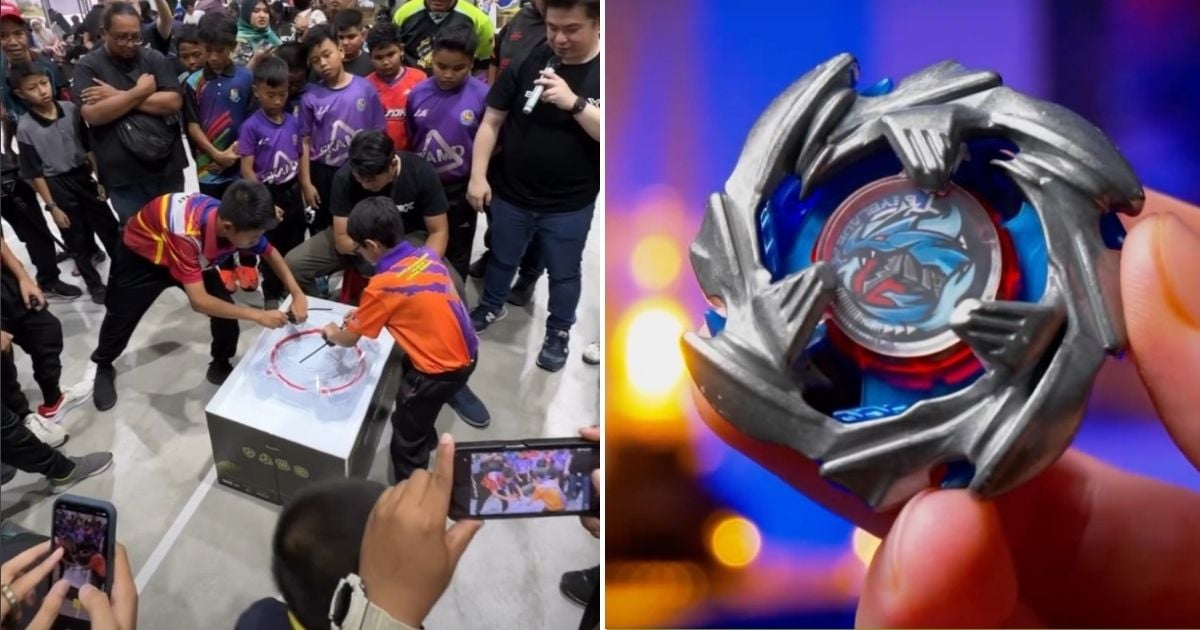
I don't think anybody would have expected this much success, but this is what happens when all the elements of a game click: tournaments are being played all around the globe, with 20+ players showing up in so many places, and we're not talking about Tokyo: there are tournaments all around rome, and you can have those numbers even in peripheral places. So many cities in the US feature the game as well.
At the moment, the market is quenched, and some items are overpriced. I'll be glad to help you navigate through this via a guide, that I'll be writing soon!
